
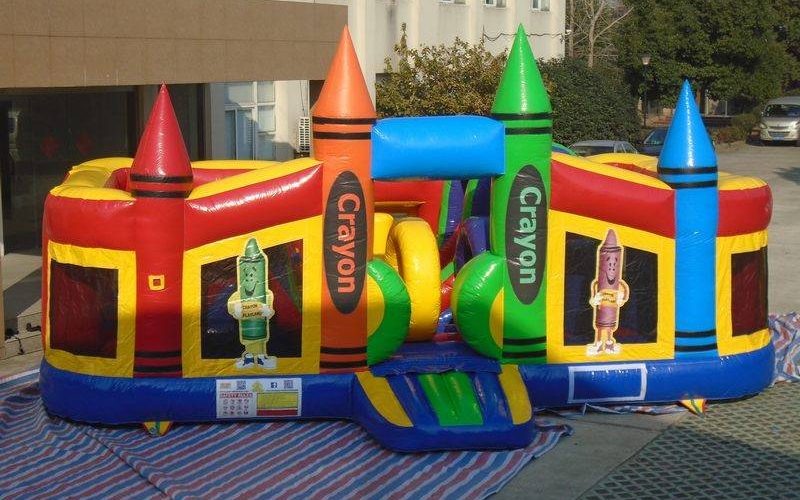
In the Australian rental industry, your jumping castles are the engine room of your business. Whether you are operating in the humid conditions of Queensland or the scorching dry heat of Western Sydney, your equipment is a major capital investment.
A common question for those looking to expand their fleet in 2026 is: What is the expected lifespan of a commercial-grade unit? While a cheap residential bouncer might fail in a single season, a high-quality commercial jumping castle should be a long-term asset. Here is a deep dive into the factors that determine longevity in the Australian market.
1. The Industry Benchmark: 3 to 6 Years
For a professionally maintained unit used for weekly commercial hire, the “sweet spot” for its most profitable life is typically 3 to 5 years.
- The “Prime” Years (Years 1-3): During this period, the PVC remains vibrant, the bounce is firm, and the unit meets all aesthetic standards for high-end corporate and wedding bookings.
- The “Workhorse” Years (Years 4-6): With proper maintenance, a unit remains safe and functional. While it may show some minor fading or professional patches, it remains a reliable earner for backyard parties and community events.
- Beyond 6 Years: Many premium units can last 8 to 10 years if they are stored perfectly and treated with UV protectants. However, by this stage, the material’s tear strength may begin to degrade, and the design may look “dated” compared to newer inventory.
2. Material Quality: The 0.55mm PVC Factor
The single biggest determinant of lifespan is the base material. In Australia, if you aren’t using 0.55mm (18oz) commercial-grade PVC, you are effectively throwing money away.
- UV Stabilization: Australia has some of the highest UV radiation levels in the world. High-quality PVC is treated with UV inhibitors that prevent the polymer chains from breaking down. This is why specialized manufacturers like East Inflatables prioritize UV-stabilized vinyl in their production—it prevents the material from becoming “brittle” and prone to cracking within 18 months of exposure to the NSW sun.
- Base Fabric Density: The internal “scrim” (the mesh between the PVC layers) must be high-density to prevent stretching. Once a jumping castle loses its structural tension, the “bounce” disappears, and the unit becomes a safety hazard.
3. The “Sydney Sun” and Environmental Impact
Where you operate in Australia significantly impacts how long your gear lasts.
- Coastal Degradation: If you operate near the Northern Beaches or Gold Coast, salt air can be highly corrosive to zippers and blower components. Regular rinsing with fresh water is essential.
- Heat Stress: In suburbs like Penrith or Blacktown, ground temperatures on a 40°C day can be extreme. Using heavy-duty ground sheets (tarps) to protect the base of the castle from hot turf or bitumen can add 12 months to the unit’s life.
4. Maintenance: The Difference Between 2 Years and 5 Years
A “cheap” operator treats their gear poorly; a “professional” operator protects their investment. To reach the 5-year mark, your maintenance routine must include:
- The “Bone Dry” Rule: Never store a jumping castle damp. Mold and mildew can ruin the internal baffles and cause “delamination” in a matter of weeks. If it rains on a Sunday, the unit must be inflated and dried on Monday.
- Baffle Inspection: The internal “walls” that hold the shape of the castle are under immense pressure. Regularly checking for internal thread-pull ensures the unit doesn’t “bubble” or lose its shape.
- Professional Seam Checks: Checking high-stress points (like the entrance and slide exits) for thread wear allows you to perform “preventative patching” before a major blowout occurs.
5. Safety Compliance and AS 3533.4.1
In Australia, a jumping castle’s life isn’t just determined by its looks, but by its compliance.
- Annual Inspections: To remain insured, your gear must pass annual safety checks. A unit that has lost significant air pressure or has developed thin spots in the PVC will fail an inspection under AS 3533.4.1, effectively ending its commercial life regardless of its age.
- Manufacturing Standards: Seasoned hire businesses often look for brands like East Inflatables because their designs are engineered to these specific international safety benchmarks, ensuring the unit doesn’t just look good but remains structurally sound for several years of rigorous testing.
6. Calculating Your ROI (Return on Investment)
When deciding how much to spend on a new unit, look at the “Cost Per Hire” rather than the “Purchase Price.”
- Budget Unit: $2,000 purchase price / 40 hires (lasts 1 year) = $50 per hire.
- Premium Unit: $4,500 purchase price / 250 hires (lasts 5 years) = $18 per hire.
Investing in higher-quality gear might cost more upfront, but it dramatically lowers your long-term overheads and ensures you aren’t constantly replacing stock every few seasons.
The Verdict
A high-quality commercial jumping castle in the Australian market should reliably serve your business for at least 4 to 5 years of heavy weekend use. By prioritizing 0.55mm UV-stabilized PVC, adhering to a strict “dry storage” policy, and ensuring compliance with Australian Standards, you can maximize the lifespan of your fleet and ensure your business remains profitable and safe.
If your current inventory is showing signs of “chalking,” brittleness, or excessive air loss after only 12-24 months, it is time to reassess your sourcing and maintenance strategies to better suit the demanding Australian climate.